✦ Key Takeaways
Toast the spices: Heat 1 tsp coconut oil in a pan. Add the Byadagi chillies and roast on medium flame. Add coriander seeds, cumin, black pepper, methi seeds, cinnamon, cardamom, cloves, and curry leaves. Roast on medium flame until fragrant, then add poppy seeds and roast for 1 more minute on low. Transfer to a blender.
Roast the coconut: In the same pan, add the roughly chopped garlic, small onion, and fresh grated coconut. Roast on medium-low flame, stirring continuously, until deep golden-brown and aromatic — about 5-7 minutes. Do not rush this on high heat. This step is the soul of the dish. Let it cool slightly.
Grind the masala paste: Add the roasted coconut mixture to the blender with the spices. Add ½ tsp turmeric and water as required. Grind into a fine, smooth paste. Set aside.
Sauté the base: In a heavy-bottomed pot, heat 2 tbsp oil and 1 tbsp ghee. Add the finely chopped onions and sauté on medium flame until soft and golden.
Sear the chicken: Add the chicken, ½ tsp turmeric, and salt. Mix well and cook on high flame for 4-5 minutes until the chicken is sealed on the outside.
Two-stage masala (the key technique): Add the chopped tomato and curry leaves. Now add only a small scoop of the masala paste — not all of it. Mix well on high flame and let the chicken absorb this concentrated base for 2-3 minutes.
Slow cook: Cover and cook on low flame for 25-30 minutes, stirring occasionally, until the chicken is nearly cooked through.
Finish the gravy: Add the remaining masala paste. Add water to achieve a slightly fluid consistency — thinner than a standard curry. The rotti will absorb the gravy as you eat, so do not make it too thick. Adjust salt. Bring to a boil on high flame.
Final simmer: Reduce heat and simmer on low for 15-20 minutes. Garnish with chopped coriander leaves. Turn off the gas.
Rest (do not skip): Cover the pot and let the curry rest for 30 minutes before serving. The flavours unify, the Tari (red oil layer) forms on the surface, and the dish transforms completely in this time.
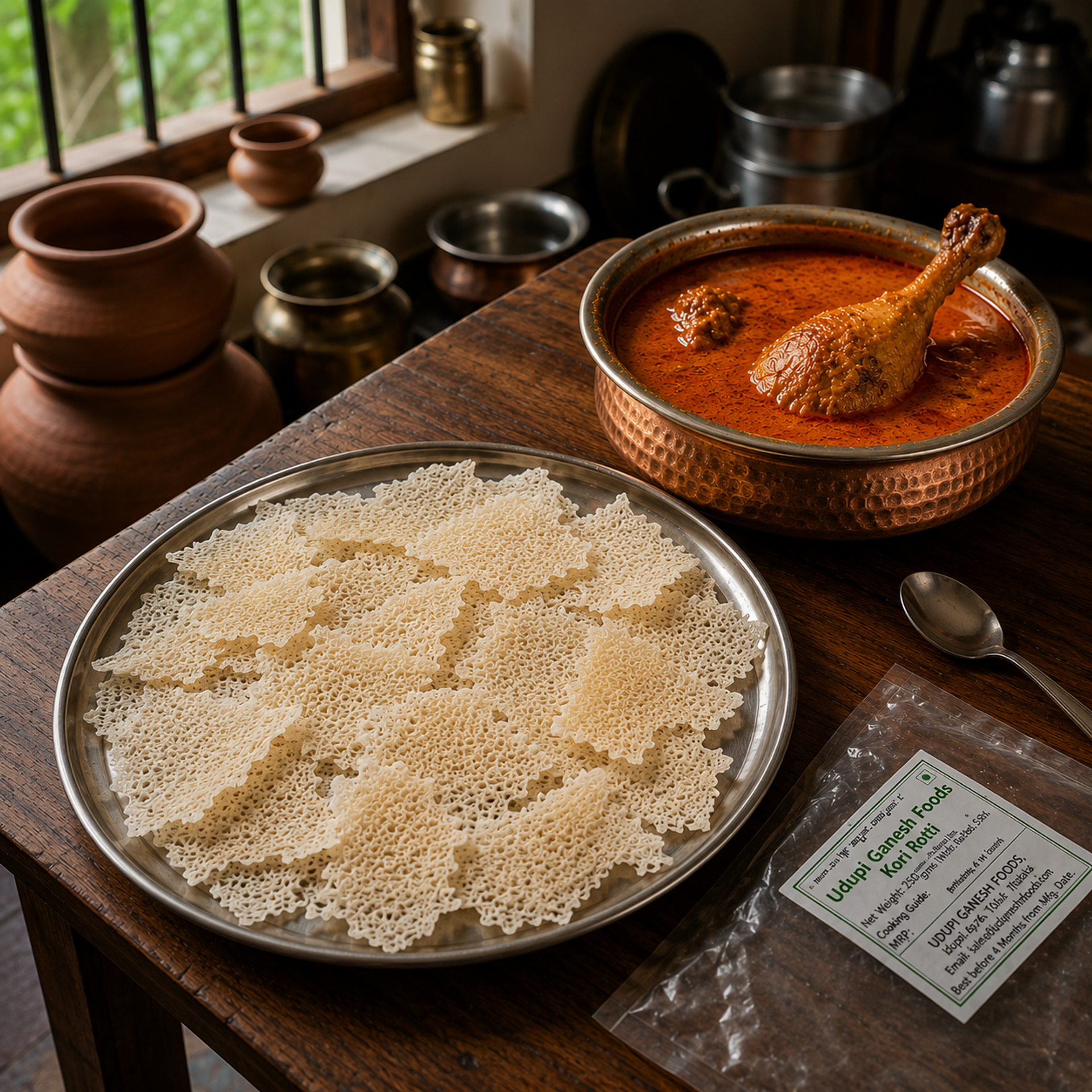
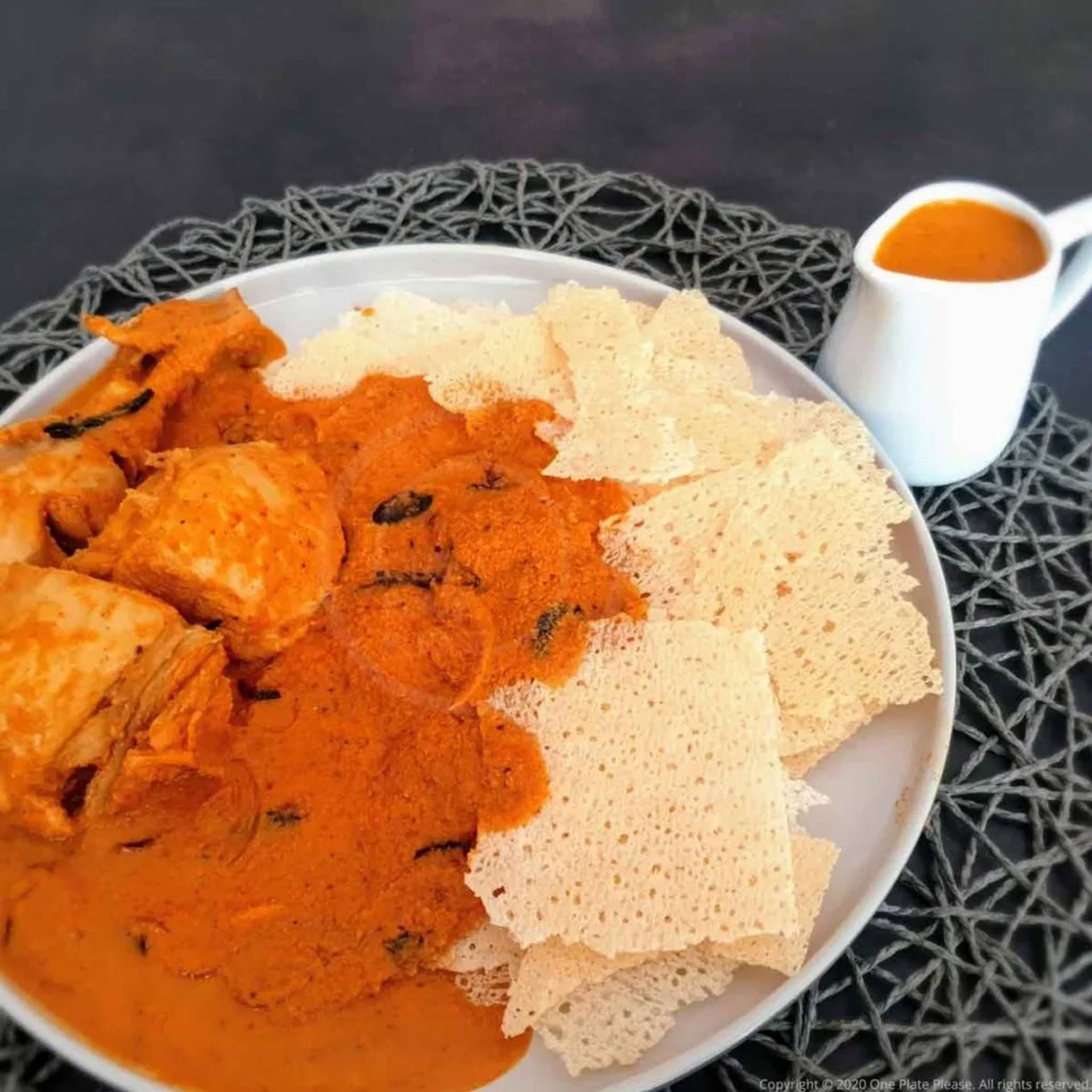
Serve: Crush Kori Rotti sheets by hand onto each plate. Ladle hot Kori Gassi generously over the top. Spoon the Tari (the red oil layer from the surface) over last. Wait 2-3 minutes before eating — the rotti should soften and absorb the curry while keeping a slight crunch at the core.
Most Kori Gassi made at home doesn't taste like what you remember. Not because the recipe is wrong — but because of four small things nobody explains.
This is the number one mistake. Kori Gassi must be slightly thinner and more fluid than a standard chicken curry. The crispy rotti is designed to act like a sponge — it absorbs the gravy gradually as you eat. If the curry is too thick, it just sits on top and the rotti stays stubbornly hard. The whole dish loses its point.
You cannot substitute generic red chilli powder and expect that signature colour and flavour. The deep reddish-orange hue and smoky mild sweetness come specifically from whole Byadagi chillies, dry-roasted in coconut oil. Standard chilli powder makes the dish sharp, flat, and one-dimensional. Use whole Byadagi chillies — nothing else works the same way.

Byadgi Chilli
ಬ್ಯಾಡಗಿ ಮೆಣಸಿನಕಾಯಿ
Authentic Byadgi Chilli — Karnataka's most celebrated red chilli for colour and depth
The soul of this dish is the roasted coconut paste. Many home cooks rush this step on a high flame — this singes the coconut and makes the final curry bitter. It needs patience. Medium-low flame, stirring continuously, until the grated coconut is a uniform deep golden-brown and the kitchen smells like it should. This single step changes everything about the final dish.
Plating is an art with Kori Rotti. Never mix the rotti into the serving pot. Crush the crispy rotti by hand directly onto your plate, ladle the hot Gassi generously over the top, and wait exactly two to three minutes before eating. You want the wafers to soften and absorb the rich coconut oils while still keeping a slight crunch at the core. Too long and they turn to mush. Two to three minutes is the window.
The veteran cooks who pick up their Sunday ingredients know this without thinking about it. If you are making Kori Gassi for the first time, this is the most important thing we can tell you.
Turn off the gas. Wait 30 minutes. Do not serve it immediately.
The heavy dose of roasted coconut and spices needs time to permeate the chicken. Eat immediately and the gravy and meat taste like two separate elements sitting on the same plate. After 30 minutes they taste like one unified dish. The difference is not subtle.
Resting allows the rich fats — coconut oil, ghee, and the natural oils from the chicken — to float to the surface. This creates a fiery red layer on top of the gravy. This is the Tari.
When you spoon that top layer over the crispy rotti, it coats the rice wafers beautifully instead of just making them soggy. The Tari is what you are chasing. It is the most flavourful part of the entire dish and it only exists if you let the curry rest.
Even after the stove is off, a covered pot continues to gently cook in its own residual heat. The flavours deepen without any risk of burning the delicate coconut base. Traditional earthen clay pots retain this heat exceptionally well — but any heavy-bottomed covered pot gives you the same effect.
In traditional Mangalorean households, the Gassi is made well before mealtime and simply left on the counter. The resting period was never a conscious step — it was just how the day worked. Bring that rhythm into your kitchen.
Add 2-3 Guntur chillies along with the Byadagi chillies during the roasting step. Guntur chillies bring heat without altering the base flavour profile of the dish.
Reduce Byadagi chillies to 5-6 and remove the seeds before roasting. The colour remains but the heat drops significantly — good for younger children or those sensitive to spice.
Kori Gassi tastes better the next day. The flavours continue to develop overnight and the masala integrates even further into the chicken. If you are making this for guests, making it the evening before and reheating gently the next day is not a shortcut — it is the right move.
A good Kori Gassi masala powder captures the same traditional spice blend and saves significant prep time. Our SRR Kori Rotti Masala is made from the same traditional recipe — add it directly at Step 6 instead of the ground paste.

SRR Kori Roti Masala
ಎಸ್ಆರ್ಆರ್ ಕೋರಿ ರೋಟಿ ಮಸಾಲ
The masala behind Karavali's most iconic dish — kori gassi the way it should taste
Gassi is the Tulu word for curry, spoken in Coastal Karnataka. Kori Gassi literally means chicken curry in Tulu. The same word is used across Coastal Karnataka cuisine — you will find prawn gassi, fish gassi, and vegetable gassi in the same tradition.
Yes — a good Kori Gassi masala powder captures the same traditional spice blend and saves significant prep time. Our SRR Kori Rotti Masala is made from the same traditional recipe and works well.
Slightly thinner and more fluid than a standard chicken curry. The rotti absorbs the gravy as you eat — if it is too thick, the rotti stays hard and the dish loses its magic. When in doubt, add a little more water before the final simmer.
Yes. A heavy-bottomed stainless steel or cast iron pot works well. The clay pot adds a subtle earthy flavour and retains heat beautifully for the resting period — but it is not essential for a great result.
Karavali Mangalore Store delivers authentic Byadagi chillies and Kori Rotti sourced directly from Coastal Karnataka across Bengaluru. Order at karavalimangalorestore.com.
Shop the Ingredients
Get everything you need from our store
Enjoyed this article?
Ready to taste authentic Mangalorean food?
Shop authentic ingredients and ready-to-eat products from the Karavali coast.