✦ Key Takeaways
On this one day every year, the sound of oil sizzling in a pan disappears completely from Coastal Karnataka kitchens.
No mustard spluttering. No dried chillies crackling in hot oil. No hiss of a tempering ladle hitting the kadai. The kitchen — the loudest room in a Mangalorean home on any other day — falls silent.
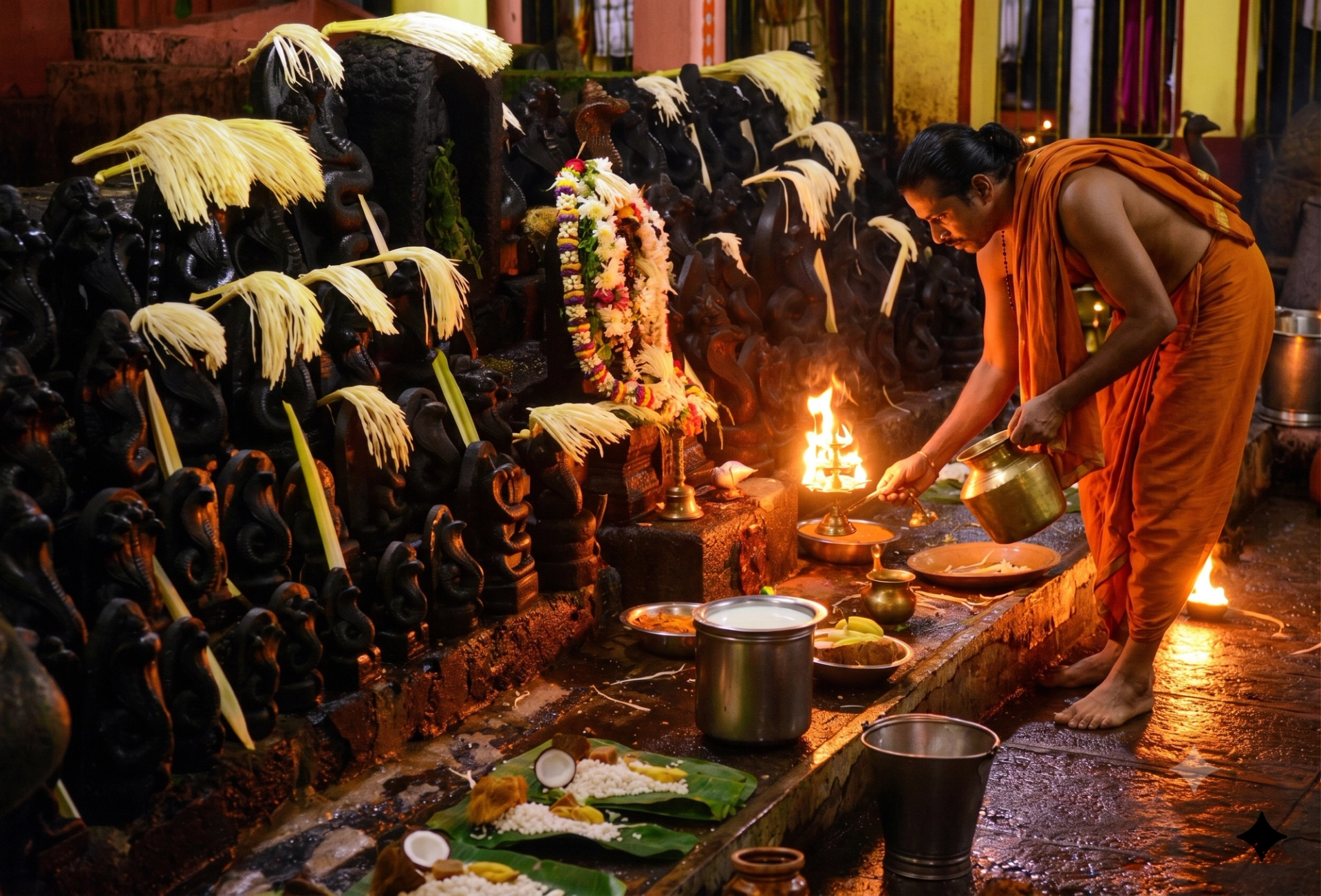
When I was young, Nagarapanchami meant one thing before anything else — going to the Nagabana at the temple with milk for the Naga Tambila. The serpent stone idol at the sacred grove, the smell of fresh tuberose and jasmine, the cool of the early morning before the rains came again. The food came after the ritual. It always did.
Here is how Coastal Karnataka actually celebrates this festival — the rituals, the rules, and the food that makes it unlike any other day of the year.
Nagarapanchami is observed across India on the fifth day (Panchami) of the bright half of the lunar month of Shravana — but the way Tulu Nadu observes it has almost nothing in common with the rest of the country. In Coastal Karnataka, it falls during the Tulu month of Aati, which coincides with peak monsoon. The rains have come in full force, the fields are flooded, and serpents emerge from the earth. This is the ecological reality that gave birth to the festival.
The Naga — the serpent — is not feared here. It is worshipped as a guardian deity. Every major temple in Coastal Karnataka has a Nagabana: a sacred serpent grove, usually a shaded enclosure behind the main sanctum, where stone serpent idols sit under ancient trees. Families come to the Nagabana before sunrise on Nagarapanchami — sometimes in procession, sometimes quietly, carrying brass vessels of milk.
The Naga Tambila is the central ritual: pouring fresh milk, tender coconut water (siyaala), ghee, and honey over the Naga stone, offering marigolds and hibiscus, lighting a lamp. The idols are decorated with areca flower garlands — the fragrant, highly prized flower of Coastal Karnataka. This is done before any food is prepared or eaten. The kitchen only opens after the family returns from the Nagabana.
The Abhisheka in Tulu Nadu uses fresh milk, tender coconut water (siyaala), ghee, honey, and water — poured gently over the stone one offering at a time. Families also bring Pingara — the cream-coloured areca nut flower considered especially sacred to the Naga deity in Coastal Karnataka. You won't find this offering in Nagarapanchami rituals anywhere else in India.
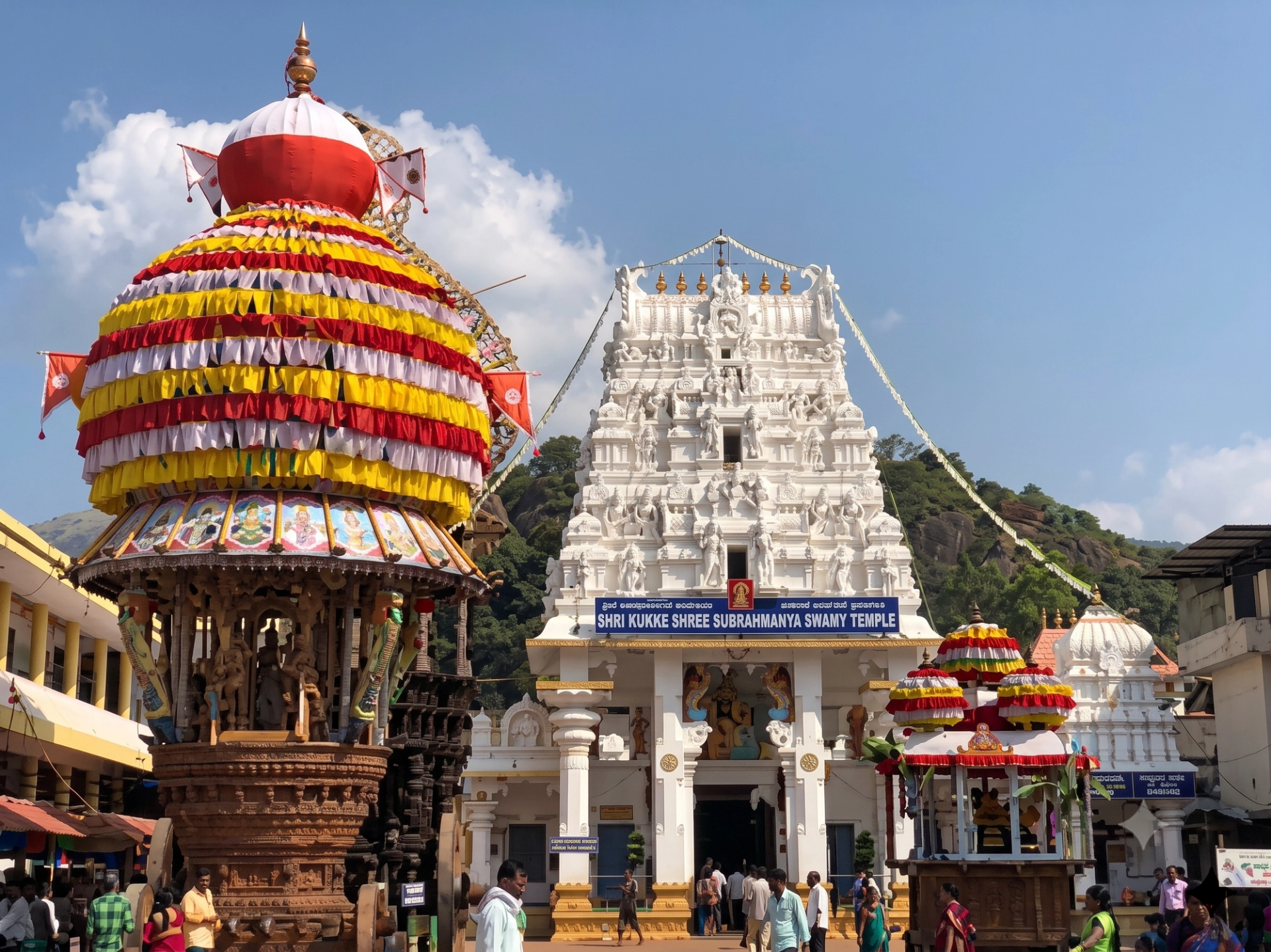
The most significant serpent temple in all of India — Kukke Shree Subramanya — is in Coastal Karnataka itself, roughly 100 kilometres from Mangalore. On Nagarapanchami, hundreds of thousands of devotees make the pilgrimage there. The fact that the country's premier Naga temple sits in Tulu Nadu is not a coincidence — it reflects how deeply serpent worship is embedded in this specific geography.
The Nagabana is not just a place of worship — it is an ecologically protected space. Cutting trees, clearing vegetation, or altering the grove in any way is forbidden by social taboo. Tulu Nadu communities have been protecting these forest patches for centuries — long before conservation had a formal name. Every Nagabana is a small, untouched pocket of original forest preserved by belief.
In Tulu Nadu, a Nagabana is not a general temple open to all — it is an ancestral grove belonging to a specific Kutumba, a family lineage. Every family believes their Naga Devatha is their personal guardian — protecting the lineage from misfortune, illness, and hardship. On Nagarapanchami, members of the entire Kutumba travel back to their ancestral home from wherever they are — Bengaluru, Mumbai, abroad — to gather at their family's specific Nagabana. The responsibility to maintain the grove and fund the rituals passes from generation to generation. It is not a festival you attend. It is a duty you inherit.
No frying. No roasting. No tempering. No cutting of vegetables.
These aren't suggestions — in Tulu Nadu homes, these are the hard rules of Nagarapanchami cooking. The reason is specific: the hissing, sputtering sound of oil heating in a pan resembles a serpent. On a day dedicated to the Naga deity, that sound is considered deeply disrespectful. So the entire day's cooking must be done without it.
What this means in practice:
Every dish made on this day is steamed. Coconut milk is used instead of oil. Jaggery replaces sugar. The result is a completely different flavour register — soft, sweet, aromatic, entirely without the sharp fried edges that define South Indian food on every other day of the year.
Compare this to the rest of India: in North Karnataka, Nagarapanchami means Tambittu (dry sesame-jaggery squares) and fried snacks. In Maharashtra, it means milk-based sweets. In Tulu Nadu, it is strictly steamed food — no exceptions.
The silence in the kitchen IS the festival.
Every dish made on this day follows the same logic — steamed, coconut milk based, jaggery sweetened. No exceptions.
Patholi is rice batter spread thin on fresh turmeric leaves, filled with a mixture of grated coconut and jaggery, folded along the spine of the leaf, and steamed. That's it. The technique is simple. The result is something that cannot be replicated any other way.
The turmeric leaf does something during steaming that no other leaf does: it releases a green, grassy, faintly medicinal fragrance directly into the rice. The rice absorbs this aroma as it cooks. When you unwrap the leaf, you get a soft, lightly translucent dumpling that smells of turmeric, sweet coconut, and dark jaggery all at once. This is what Nagarapanchami smells like in a Coastal Karnataka home.
In Mangalore, the dish is called both Patholi and Eeradde — the names are interchangeable, though older families tend to use Eeradde. No supermarket makes it. It can't be stored. It must be made fresh on the day or ordered the day before.

Turmeric Leaf Kadubu (Patholi)
ಅರಿಶಿನ ಎಲೆ ಕಡುಬು
Rice dumplings steamed in turmeric leaves — the fragrant Karavali kadubu with a golden character
Akki Halbai is a rice halwa — ground rice cooked with coconut milk and jaggery until it reaches a dense, gelatinous consistency. It sets as it cools, like a firm panna cotta. The texture is nothing like North Indian halwa: there's no ghee, no crumble, no grain. It's smooth and dense and very dark from the jaggery, with the faint richness of coconut milk underneath. Akki Halbai is made in a flat tray, cooled, and cut into squares. It's the kind of sweet that requires patience — the rice must be soaked overnight and the cooking is slow.
Mette Ganji is fenugreek rice porridge — boiled red rice, fenugreek seeds, and coconut milk, sweetened with jaggery. It's a soothing, slightly bitter, deeply warming porridge that makes sense in the context of monsoon morning food. The fenugreek gives it a mild bitterness that cuts through the coconut milk's richness. Mette Ganji is the breakfast dish of Nagarapanchami in many homes — made before the Nagabana visit, eaten after returning.
Ellu Unde are sesame seed laddoos bound with jaggery. They're offered to the Naga deity as prasad and eaten at home after the ritual. Sesame is one of the five ingredients in Panchakajjaya — the traditional five-ingredient offering to the Naga — along with jaggery, rice flakes, grated coconut, and banana. Ellu Unde is the most portable of the Nagarapanchami sweets, and the only one available year-round.
Three distinctions set Coastal Karnataka apart from every other region that observes Nagarapanchami:
North Karnataka makes Tambittu — dry, crumbly sesame-jaggery squares that keep for days. Tulu Nadu makes Patholi on fresh turmeric leaves — highly perishable, made on the morning of the festival, eaten within hours. The turmeric leaf is non-negotiable. There is no substitute.
Most of India makes milk-based sweets for Nagarapanchami — kheer, payasam, milk halwa. In Coastal Karnataka, coconut milk is the base for every sweet made on this day: Akki Halbai, Mette Ganji, Patholi filling. Dairy milk is not used in cooking at all. It is reserved entirely for the Naga Abhisheka — the ritual milk pouring at the Nagabana. The distinction is deliberate and absolute.
Most South Indian festival cooking involves at least some tempering — mustard, curry leaves, dried chilli in oil. Tulu Nadu Nagarapanchami has zero. Not reduced. Not optional. Zero. No other Karnataka festival has a food rule this absolute. Even Ugadi, Ganesh Chaturthi, and Deepavali all permit normal cooking alongside the festival dishes. Nagarapanchami in Tulu Nadu does not.
In most of India, Naga worship uses temporary clay idols that are made and immersed in water. In Tulu Nadu, the Nagabana is permanent — a living micro-ecosystem, an ancient sacred grove that is legally and socially protected. Cutting any tree near a Nagabana is forbidden by community taboo. These groves function as undisturbed wildlife corridors within temple compounds. The festival isn't just spiritual — it's an ancient conservation practice encoded in ritual.
Every sweet made on Nagarapanchami uses jaggery. Not sugar — jaggery. Patholi filling is grated coconut with jaggery. Akki Halbai is sweetened with jaggery. Mette Ganji is sweetened with jaggery. Ellu Unde is bound with jaggery.
This isn't arbitrary. Jaggery is the traditional sweetener of Coastal Karnataka — it pre-dates refined sugar in the region by centuries. It also has a practical advantage: it doesn't curdle coconut milk the way sugar can at high temperatures. The combination of dark jaggery and fresh coconut milk gives Nagarapanchami food its characteristic deep, caramel-adjacent sweetness — something entirely absent from sugar-sweetened versions of the same dishes.
Dark Karavali jaggery is the right choice for these dishes — the deeper colour and stronger flavour give Patholi and Akki Halbai their correct character. The pale variety sold in most cities produces a noticeably different result.

Liquid Jaggery (Joni Bella)
ದ್ರವ ಬೆಲ್ಲ (ಜೋನಿ ಬೆಲ್ಲಾ)
Traditional Karavali joni bella — liquid jaggery that belongs in every Coastal Karnataka kitchen
Most Mangalorean families in Bengaluru still observe Nagarapanchami fully — the Nagabana visit, the no-frying rule, the steamed food. The ritual adapts but the logic doesn't change. Families go to Kannada temples in Bengaluru that have serpent groves — some in Jayanagar, Malleswaram, and Banashankari — on the morning of the festival.
The pull of the family Nagabana is real even from Bengaluru. Many Mangalorean families make the drive back to their ancestral village specifically for Nagarapanchami — not for a holiday, but because the Kutumba gathers at the family grove and your absence is noticed. For those who cannot travel, the festival is observed at home with the same food rules intact.
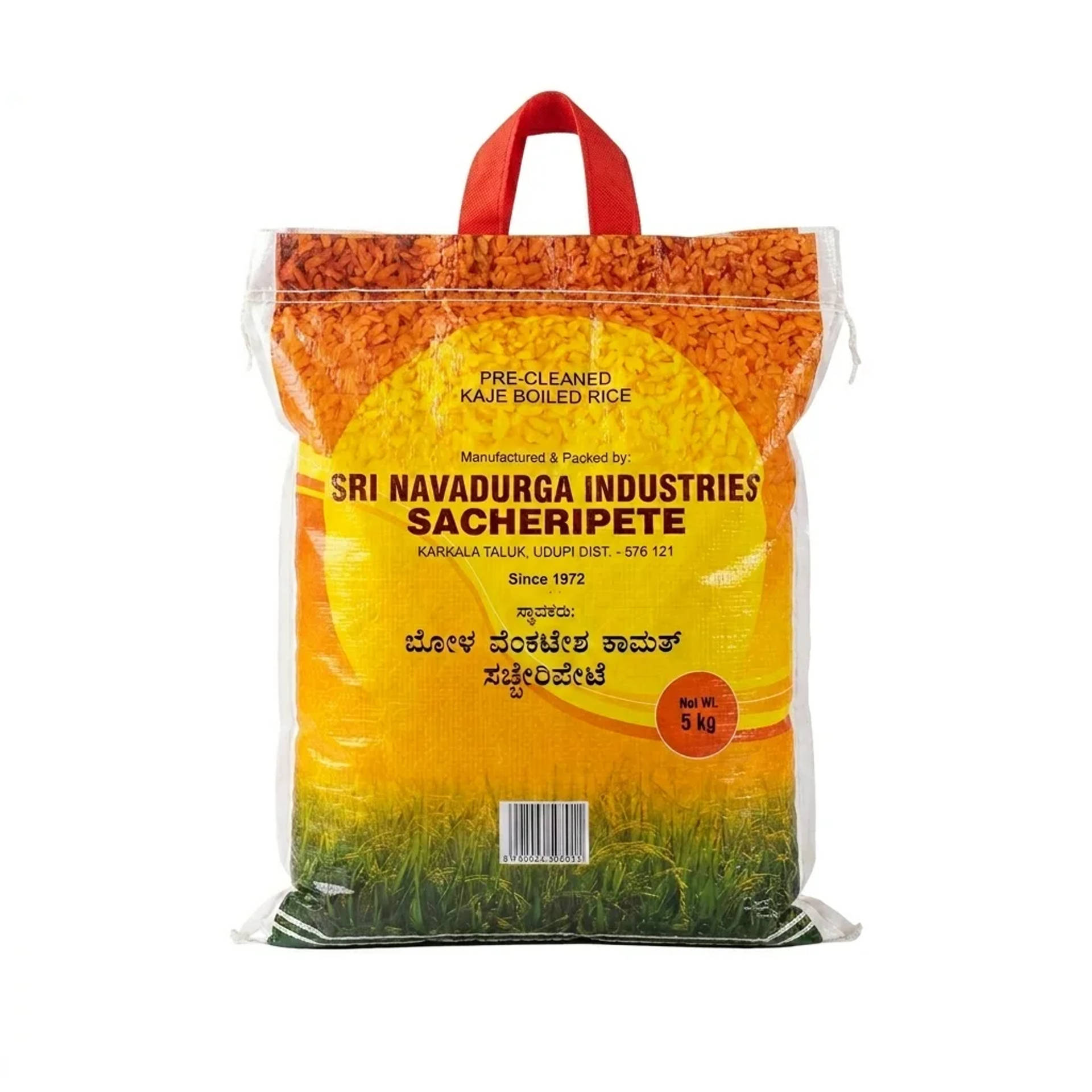
The harder part is the food. Fresh turmeric leaves are difficult to find in Bengaluru outside of specialty stores. Red boiled rice, the correct variety for Mette Ganji, isn't stocked in most supermarkets. Dark Coastal Karnataka jaggery is almost never on a supermarket shelf.
This is precisely why Mangaloreans in Bengaluru order Nagarapanchami ingredients from home-region stores rather than substituting with what's locally available. The difference between Patholi made on a fresh turmeric leaf and Patholi made on a banana leaf (the common substitute) is significant enough that most families won't accept the substitute. The aroma simply isn't the same.
Karavali Mangalore Store stocks Patholi (fresh, seasonal — order via WhatsApp for Nagarapanchami), Ellu Unde, dark Karavali jaggery, rice flour, and boiled red rice for delivery in Bengaluru.
Nagarapanchami 2026 falls on Monday, August 17. In Tulu Nadu, it is observed during the Tulu month of Aati, which coincides with the peak monsoon season in Coastal Karnataka — the time when serpents emerge from flooded fields and the significance of Naga worship is most deeply felt.
In Coastal Karnataka tradition, the hissing sound of oil heating in a pan resembles a serpent and is considered disrespectful to the Naga deity on this day. All cooking must be done by steaming — no frying, no tempering, no dry-roasting. This is the strictest food observance of any Karnataka festival, with no exceptions permitted.
Patholi (also called Eeradde) is a steamed rice dumpling made by spreading rice batter on fresh turmeric leaves, filling with grated coconut and jaggery, folding along the leaf spine, and steaming. The turmeric leaf releases a distinct green, aromatic fragrance into the rice during steaming — it's the defining dish of Nagarapanchami in Tulu Nadu and cannot be authentically replicated with any other leaf.
Naga Tambila is the ritual of pouring fresh milk over the serpent stone idol at the Nagabana — the sacred serpent grove found near most temples in Coastal Karnataka. Families perform this ritual before sunrise on Nagarapanchami. The milk offering is the primary act of worship; the food traditions of the day follow only after the family returns from the Nagabana.
Karavali Mangalore Store stocks fresh Patholi (seasonal — order via WhatsApp before August 15), Ellu Unde, dark Karavali jaggery, rice flour, and boiled red rice for Nagarapanchami. Order at karavalimangalorestore.com or WhatsApp directly for fresh items and seasonal availability.
Shop the Ingredients
Get everything you need from our store
Enjoyed this article?
Ready to taste authentic Mangalorean food?
Shop authentic ingredients and ready-to-eat products from the Karavali coast.